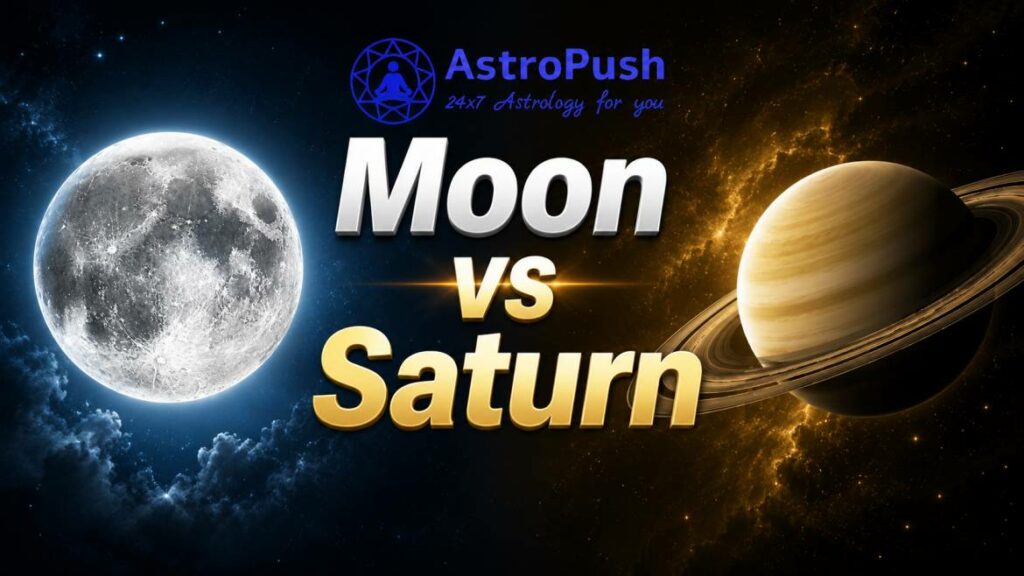
Are Moon’s Drishti and Saturn’s Influence Really Dangerous in Life? Understanding the
Psychological Perspective of Vedic Astrology
In Vedic astrology, the Moon is considered the significator of the mind, emotions, mental peace, and inner sensitivity. A person’s thought process, emotional responses, relationship patterns, and overall mental balance are strongly influenced by the placement and condition of the Moon in the birth chart. When the Moon casts its Drishti (aspect) on a house or planet, it influences the emotional and psychological dimensions of life in profound ways.
Many people wonder whether Moon’s Drishti and Saturn’s influence can bring negative outcomes, emotional suffering, relationship challenges, or mental stress. This question is especially common among those who encounter difficult planetary combinations involving the Moon and Saturn. However, according to Vedic astrology, the answer is far more nuanced than a simple yes or no. Rather than being inherently harmful, this combination often serves as a catalyst for personal growth, emotional maturity, and self-awareness.
What Is Moon’s Drishti in Vedic Astrology?
The Moon is not merely a celestial body in Vedic astrology; it represents the mind, emotions, intuition, and subconscious patterns. Moon’s Drishti influences how an individual processes emotions, reacts to situations, and forms connections with others.
When the Moon is strong and well-placed, it enhances emotional intelligence, compassion, empathy, and mental stability. Such individuals are often capable of understanding the feelings of others and maintaining harmonious relationships. They tend to approach life with sensitivity while remaining emotionally balanced.
On the other hand, a weak or afflicted Moon can create emotional instability, insecurity, confusion, and excessive sensitivity. Individuals may find it difficult to regulate their emotions, leading to mood fluctuations and emotional dependency. Because the Moon governs the mind, its condition has a direct impact on psychological well-being.
How Moon’s Drishti Influences Emotional Energy
Every individual experiences emotions differently, and the Moon plays a central role in shaping this emotional landscape. Moon’s Drishti affects the way we perceive experiences, process feelings, and respond to life’s challenges.
A strong Moon often creates emotional resilience, self-confidence, empathy, and healthy emotional expression. These individuals usually feel secure within themselves and are capable of nurturing meaningful relationships. Their emotional responses tend to be balanced and thoughtful rather than impulsive.
Conversely, when the Moon is weak or influenced by challenging planetary energies, emotional turbulence may arise. People may become overly sensitive, anxious, dependent on external validation, or prone to emotional overreactions. Even minor situations can feel overwhelming, leading to unnecessary stress and confusion.
This is why the Moon is considered one of the most important indicators of emotional health in Vedic astrology.
The Connection Between Moon’s Drishti and Mental Peace
Mental peace is not determined solely by external circumstances. It is largely influenced by how the mind interprets and responds to those circumstances. Since the Moon governs the mind, its condition directly impacts mental stability and inner harmony.
A balanced Moon supports clear thinking, emotional stability, restful sleep, and a positive outlook on life. Such individuals can remain calm during difficult situations and recover more quickly from emotional setbacks. They often possess strong coping mechanisms and a healthy relationship with their emotions.
However, when the Moon is afflicted, the mind may become restless. Excessive worrying, overthinking, anxiety, emotional exhaustion, and difficulty making decisions can become common experiences. The individual may feel trapped in recurring emotional patterns that affect both personal and professional life.
For this reason, understanding the Moon’s influence is essential when exploring mental and emotional well-being through the lens of Vedic astrology.
- Chat with astrologer online
- Talk to astrologer online
- Free kundli generation
- Free horoscope prediction
- Kundli matching
- Numerology
- Panchang calendar
Is the Moon-Saturn Combination Really Dangerous?
Among all planetary influences, Saturn is often misunderstood. Many people associate Saturn exclusively with obstacles, delays, and hardships. In reality, Saturn represents discipline, responsibility, patience, karma, and long-term growth.
When Saturn influences the Moon, it creates an opportunity for emotional development and maturity. Although this process may feel challenging, its purpose is not to cause suffering but to strengthen the individual psychologically.
Saturn encourages a person to confront fears, insecurities, emotional attachments, and unresolved issues. It teaches emotional responsibility and helps individuals develop resilience. While the lessons may be difficult at times, they often lead to profound personal transformation.
Therefore, the Moon-Saturn connection should not automatically be viewed as dangerous. Instead, it can be understood as a combination that promotes emotional wisdom through life experiences.
The Combined Influence of Moon and Saturn
When the Moon and Saturn interact strongly in a birth chart, a person often develops a serious and reflective approach to life. These individuals tend to think deeply about their experiences and are naturally inclined toward self-analysis.
In some cases, the early years of life may involve emotional challenges, feelings of loneliness, or increased responsibilities. However, these experiences often contribute to greater emotional strength over time. Such individuals frequently become more mature, practical, and emotionally disciplined than their peers.
Rather than relying solely on emotions, they learn to balance feelings with logic and responsibility. As a result, they often develop strong inner stability and a realistic understanding of life’s complexities.
Moon’s Drishti and Relationship Psychology
Relationships are built not only on love and attraction but also on trust, emotional security, and mutual understanding. The Moon plays a significant role in determining how individuals express affection, form attachments, and respond to emotional needs within relationships.
A strong Moon supports emotional openness, trust, empathy, and effective communication. These individuals are usually capable of building long-term relationships based on emotional connection and mutual respect.
A weak Moon, however, may contribute to insecurity, fear of rejection, unrealistic expectations, and emotional misunderstandings. Individuals may struggle with vulnerability or become overly dependent on their partners for emotional validation.
When Saturn also influences relationship dynamics, partnerships often become more serious and karmic in nature. These relationships may involve important life lessons that encourage growth, patience, and emotional maturity.
- Chat with astrologer online
- Talk to astrologer online
- Free kundli generation
- Free horoscope prediction
- Kundli matching
- Numerology
- Panchang calendar
Behavioral Patterns Shaped by Moon’s Drishti
Moon’s Drishti influences more than just emotions. It also shapes behavioral patterns, coping mechanisms, and interpersonal dynamics.
The Moon affects how a person responds to stress, handles criticism, expresses feelings, trusts others, and manages emotional challenges. Childhood experiences and emotional conditioning are also often reflected through the Moon’s placement.
This psychological dimension is one reason why the Moon is considered so important in astrological analysis. Understanding its influence can provide valuable insight into an individual’s emotional needs and subconscious motivations.
Remedies to Strengthen Moon Energy
For individuals experiencing emotional instability, mental stress, or relationship challenges, traditional Vedic practices often recommend strengthening Moon-related energies.
Practices such as Monday worship dedicated to Lord Shiva, chanting “Om Chandraya Namah,” regular meditation, maintaining healthy sleep patterns, and cultivating emotional awareness are believed to support mental balance and inner peace.
Spending time in nature, practicing gratitude, and expressing emotions in healthy ways can also contribute to emotional well-being. However, any gemstone or advanced astrological remedy should only be considered after consulting a qualified astrologer who can evaluate the birth chart accurately.
Why Is Professional Astrological Guidance Important?
The influence of planets such as the Moon and Saturn cannot always be understood through general predictions alone. Every individual has a unique birth chart, which means planetary effects vary according to personal circumstances, karmic patterns, and life experiences. In many cases, a planetary combination that appears challenging for one person may become a source of growth, success, and emotional maturity for another.
This is why proper analysis of any planetary placement or astrological combination should be conducted by experienced astrologers. A qualified astrologer does more than simply interpret planetary influences. They consider an individual’s emotional state, relationships, career path, life challenges, and future possibilities before offering personalized guidance.
Why Consult AstroPush Astrologers?
The experienced astrologers at AstroPush provide in-depth birth chart analysis based on the principles of Vedic astrology. Rather than merely identifying challenges, they focus on understanding the root causes behind life’s situations and offering practical guidance tailored to your unique circumstances.
If you are seeking clarity about Moon’s Drishti, Saturn’s influence, emotional stress, relationship challenges, or important life decisions, consulting AstroPush astrologers can help you gain a deeper understanding of your astrological blueprint. Timely and accurate astrological guidance can support better decision-making, emotional balance, and a more positive direction in life.
The true purpose of astrology is not to create fear but to promote self-awareness and help individuals achieve greater balance and understanding. With the right guidance, people can better understand planetary influences and use their strengths more effectively to navigate life’s challenges and opportunities.
Conclusion
Moon’s Drishti plays a crucial role in shaping emotional energy, mental peace, and relationship dynamics. It reflects how individuals process emotions, build connections, and respond to life’s experiences. Saturn, on the other hand, introduces discipline, responsibility, and emotional maturity.
Although the combination of Moon and Saturn may sometimes bring intense emotional lessons, it should not automatically be viewed as harmful. In many cases, these planetary influences encourage growth, resilience, and self-discovery.
Rather than fearing these planetary energies, understanding their deeper purpose can help individuals navigate life more effectively. When emotional awareness is combined with proper guidance and self-reflection, even challenging planetary influences can become powerful tools for transformation, wisdom, and long-term personal growth.